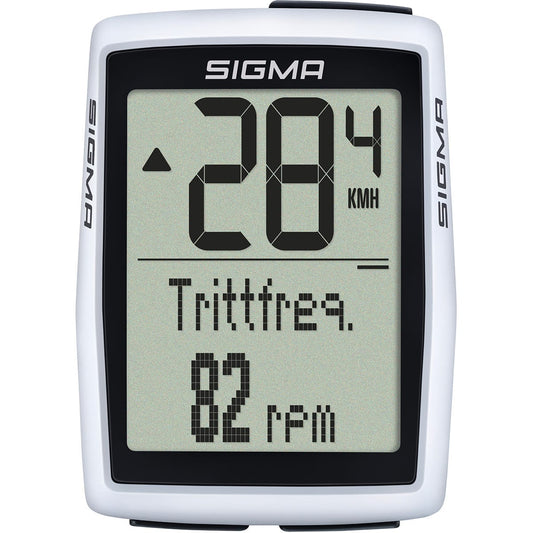
Wireless bike computers

2 products

Wired or wireless cycle computers: what's the point of them today?

Compared with a GPS bike computer, a traditional cycle computer has two strong points: it doesn't need charging and asks nothing of you. A battery lasts several seasons, with no app, account or syncing. If you simply want to know your speed, distance and total mileage, it's the most straightforward solution.

How it measures

A magnet attached to a spoke passes a sensor mounted on the fork once per wheel revolution. The computer calculates speed and distance from the wheel circumference that you enter during setup. This is the only setting that really matters: get it wrong and all the readings will be inaccurate. You can measure it with a tape measure or find it in the manual's table based on tyre size.

Wireless or wired

The wireless (WL) eliminates the cable running along the fork: a neater setup with no risk of the cable being torn off. It does need an extra battery in the sensor. Wired models are unbeatable for reliability and price, but the cable ages.

Features by model

  • Current, average and maximum speed, trip distance and total mileage: the standard basics.
  • Thealtimeter adds total elevation gain and gradient — that's what sets higher-end models apart.
  • The temperature and a clock are common features.
  • Some models support two bikes and keep a separate total mileage reading for each.

When to choose a GPS bike computer instead

As soon as you want to record your rides, find them on Strava, follow a route or measure your power. A traditional cycle computer records nothing: it displays the figures, and that's it. For everyday use, a city bike or a second bike, that's exactly what you need.

To find out more: How to choose your cycle computer

See also: GPS bike computers · GPS and camera mounts · Bike lights