


How to choose your Home Trainer?

A turbo trainer is ideal for maintaining fitness, completing targeted training sessions or riding out of the weather. From direct-drive models and rollers to interactive systems connected to apps such as Zwift, the right choice depends on your goals, budget and expectations for realism.
The standards
- Types of trainers: frame-mounted turbo trainers, rollers and indoor bikes
- Types of resistance: air, mechanical, fluid, magnetic / electromagnetic
- Types of training: interactive and connected
Turbo trainer or rollers?
Manufacturers offer two types of indoor trainer: rollers and frame-mounted turbo trainers. The main difference is that your bike is not fixed in place on rollers, whereas it is on a frame-mounted turbo trainer.
Rollers take up little space and are quick to use. Although you need to learn to keep your balance, they are the most convenient system: you simply ride onto them, without removing or fitting any components. They do have drawbacks, though. While some high-end models let you select a resistance level before you start, you cannot change it during a session without getting off the bike. At high intensity, it can also be difficult to keep your balance and stay on the rollers.
As well as offering excellent stability, the turbo trainer’s main advantage is the ability to choose between different levels of pedalling resistance. You can adjust it remotely using a lever connected by cable to the trainer’s roller. This system takes longer to set up but lets you carry out highly targeted training sessions.
Rollers
As mentioned earlier, this system is the easiest to set up because it requires no attachment to the bike, which stays upright thanks solely to the gyroscopic effect of its wheels. Good balance and flexibility are therefore essential to feel comfortable and pedal naturally.
Rollers are ideal for warming up or for short sessions alongside other training, helping to improve balance and cadence. However, adjustment options are fairly limited.
Because the bike is not fixed in place, it is impossible to simulate a gradient, and the number of resistance levels is limited.
Some models have a system that can reduce vibration and absorb jolts caused by pedalling.
If you choose a roller, you’ll need to consider what it’s made of:
- Plastic: It provides little grip and wears the tyre quickly
- Metal: Rougher than plastic, it provides better grip
- Gel: It provides good grip and causes much less tyre wear
Frame-mounted turbo trainers
Air
These models have a fan that generates air resistance. They can therefore only simulate very gentle gradients and are among the noisiest.
Mechanical
These basic models are suitable for warming up or straightforward training. They are among the lightest because they have no complex equipment, and they fold up for transport without taking up too much space.
They have no resistance settings and are fitted only with a dial that keeps the tyre pressed against the turbo trainer’s roller. You need to use different chainring and cassette gears to vary the effort.
Fluid
This is the quietest type of model on the market. It offers pedalling resistance very close to real riding conditions. The large flywheel is immersed in oil, allowing it to simulate steep gradients.
The higher the gear and the greater the speed, the more resistance it provides.
Magnetic / Electromagnetic
These widely available models are the best option for getting started with indoor cycling because they offer more resistance and make less noise than air-resistance models.
These types of turbo trainer use magnetic force between a set of magnets and a metal flywheel. The heavier the flywheel, the more realistic the pedalling feel. This technology offers a very wide range of settings and can provide very high resistance levels.
This is the most widespread technology, from budget to top-of-the-range models, because it is very easy to use and highly robust. Entry-level models have a cable-operated adjustment dial, while higher-end models offer connectivity that allows electronic resistance control, known as electromagnetic resistance.
These models often offer very good value for money. Prices vary according to maximum power, the resistance levels available and the accessories included.
Depending on how they are set up, we can distinguish between:
The most common system attaches to the rear wheel only: it takes a little longer to set up but is more stable in use. We recommend using a turbo trainer tyre, which is designed for the purpose and will last longer than a standard road tyre. Basic models with magnetic resistance are relatively simple, but you can also find electromagnetic models offering a wide range of training features, even simulating a real ride with visuals
The most advanced system replaces your rear wheel entirely and drives a cassette directly:
Cyclists looking to pedal precisely at higher power levels will choose these models because resistance is transmitted directly through the chain, avoiding a loss of power. Like wheel-on models, they offer a range of settings and training aids.
INDOOR BIKES
They redefine how turbo trainers are used and how fitness cycling is done in gyms. Indoor bikes let you ride at home without using your own bike while maintaining the same setup and riding position. Your bike can stay in the garage, avoiding general wear and repeated removal and refitting that could damage components.
These products provide a realistic ride feel with great accuracy and responsiveness while remaining quiet. You can even add your own components, such as handlebars, pedals or a saddle, to keep a familiar setup.
These turbo trainers can connect to virtual platforms for complete immersion in your training or a race. They also offer ANT+ and Bluetooth connections to incorporate data from external devices such as smartphones or sensors. Some models, such as the Wahoo Kickr Bike, offer a distinctive experience with real-time physical gradient changes and gearing that can be programmed to match your bike. Stages also offers its Cycling Smart Bike, which has the advantage of accurately measuring pedalling power.
Connected turbo trainers? Yes!
Pedalling in your living room or garage can be rather dull, we admit. That’s exactly why connected turbo trainers arrived on the scene.
Taking part in and organising online races, competing against virtual opponents or other cyclists in real time, sharing and creating custom routes, viewing rides in 2D or with Google Maps… There are plenty of features to help you extend and enrich your training while making it more fun and engaging.
With these interactive, virtual models, the software automatically adjusts the resistance and braking system to the characteristics of your chosen route. For added realism, they can also be fitted with a steerable front-wheel support so you can control your line.
It is worth noting, however, that the apps offered with these interactive turbo trainers are not always free. Basic features are generally included, but you need to buy a licence to access all the other features available through the platform
Which turbo trainer should you choose?
To choose the turbo trainer best suited to your riding, you therefore need to consider:
- Compatibility with your bike
- Stability: the number of contact points with the floor
- The mounting system: none (rollers), rear-wheel mount, frame mount
- Maximum power
- Type of resistance: air, mechanical, fluid, magnetic/electromagnetic
- The number of resistance levels
- The resistance control: dial, handlebar-mounted lever, smartphone/tablet
- Interactivity: none, included, available as an option
Choose according to how you plan to use it and your budget. Entry-level models may suit those who simply want to stay fit over winter. For serious cyclists looking for an effective training tool to help them improve, a model that offers high pedalling resistance and works with an app to track performance is a better choice.
How can you train on your bike indoors in winter with a turbo trainer?
Once you have your turbo trainer, you may be wondering how to train effectively on it. Don’t worry, our experts have some tips:
1. Stay hydrated while riding and keep a towel handy, along with a frame protector, to avoid getting your floor and bike dirty. As you might expect, you’ll sweat a lot on a turbo trainer.
2. Keep your turbo trainer sessions short. Riding indoors in one place gives your body little airflow and causes heavy sweating. You lose a lot of water and minerals in a short time, which can leave you dehydrated.
3. Vary your exercises to keep things enjoyable and target specific skills. You can work on strength and cadence by varying the duration and intensity of each exercise. You can also improve your explosive power by including short, intense efforts followed by recovery periods.
Questions fréquentes
Quelle est la différence entre un home trainer à transmission directe (Direct Drive) et à roue (Wheel-On) ?
Mon vélo est-il compatible avec un home trainer ?
Faut-il acheter un pneu spécifique pour un home trainer ?
Combien de temps s'entraîner sur home trainer l'hiver ?
Quels accessoires sont vraiment utiles en plus du home trainer ?
Quelle est la différence entre un home trainer classique et un home trainer connecté ?
Quel est l'intérêt d'un tapis de sol sous le home trainer ?
Un home trainer à transmission directe est-il livré avec une cassette ?
Quelle puissance maximale (Watts) faut-il choisir pour son home trainer ?
Qu'est-ce que le mode ERG sur un home trainer connecté ?
Faut-il obligatoirement payer un abonnement à une application comme Zwift ?
Quelle est la différence entre les connexions ANT+ FE-C et Bluetooth Smart ?
Turbo trainers and rollers
-


Home Trainer WAHOO KICKR CORE V2 ZWIFT ONE Version COG&CLICK
Regular price 499,90 €Regular priceUnit price perRecommended price* : 549,99 €
-


Indoor trainer WAHOO KICKR CORE V2
Regular price 499,99 €Regular priceUnit price perRecommended price* : 549,99 €
-


Turbo Trainer WAHOO KICKR V6 COG
Regular price 799,90 €Regular priceUnit price perRecommended price* : 849,99 €
-


TACX FLUX S SMART T2900S Home Trainer
Regular price 499,90 €Regular priceUnit price perRecommended price* : 549,99 €
-

 New
NewCOOSPO T10 Smart Turbo Trainer
Regular price 399,90 €Regular priceUnit price perRecommended price* : 641,00 €
-

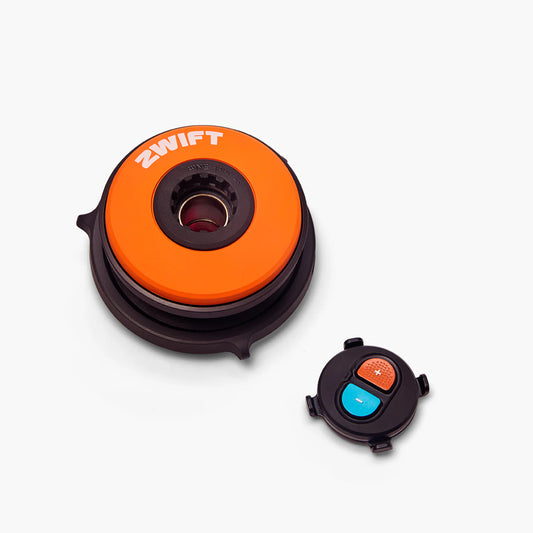
Home Trainer ELITE RIVO COG&CLICK Version
Regular price 409,90 €Regular priceUnit price perRecommended price* : 519,99 €
-
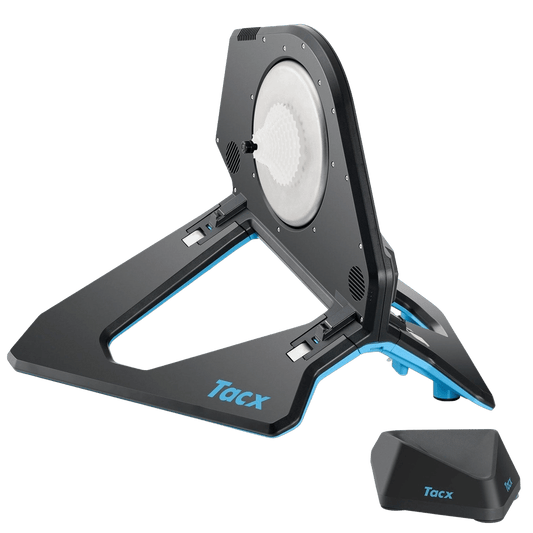

Home Trainer TACX NEO 2T SMART T2875
Regular price 799,90 €Regular priceUnit price perRecommended price* : 999,99 €
-

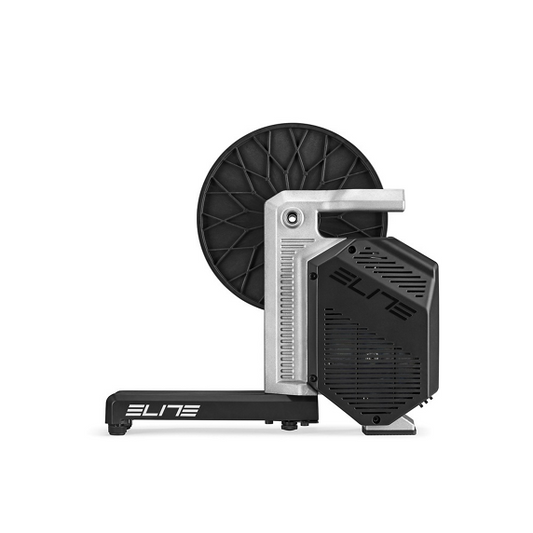
ELITE RIVO Smart Trainer
Regular price 379,90 €Regular priceUnit price perRecommended price* : 499,99 €


Publié le Mis à jour le Par l'équipe Probikeshop


